
Fast-Track Your Mobility: The Ultimate Guide to Robotic Knee Replacement Recovery in 2026


The landscape of orthopedic surgery has shifted dramatically. In 2026, Robotic Knee Replacement has moved from a “futuristic option” to the gold standard for patients in Gurgaon and across India seeking a rapid return to their active lifestyles. If you are struggling with chronic knee pain or debilitating arthritis, the primary concern is usually not just the surgery itself, but how quickly you can get back on your feet.
This guide provides a comprehensive breakdown of what recovery looks like when cutting-edge robotics meets expert surgical care. We will explore why this technology is trending globally and how it specifically benefits patients looking for the best orthopaedic doctor in Gurgaon.
Understanding Robotic-Assisted Recovery
Robotic Knee Replacement Recovery refers to the post-operative healing phase following a Total Knee Arthroplasty (TKA) performed with robotic assistance. Unlike traditional surgery, the robot allows for “sub-millimeter” precision, meaning less damage to your healthy tissues and a much smoother rehabilitation process.
Featured Snippet: Why is Robotic Recovery Faster?
Robotic systems use 3D mapping to plan bone cuts with extreme accuracy. This minimizes “soft tissue trauma”—the stretching and cutting of muscles and ligaments—which is the primary cause of post-surgical pain. As a result, patients often experience 40-50% less pain and can often walk within hours of the procedure.
The 2026 Recovery Timeline: From Surgery to Success
Recovery is a journey, not a sprint. However, with robotic technology, the milestones are reached much sooner than with conventional methods.
| Phase | Timeline | Key Milestones & Goals |
| Early Mobilization | Day 0 – Day 3 | Standing up and walking short distances with a walker; hospital discharge usually within 24–72 hours. |
| Initial Healing | Week 1 – Week 2 | Transitioning from a walker to a cane; staples or sutures removed; significant reduction in swelling. |
| Functional Restoration | Week 3 – Week 6 | Returning to desk work; driving (if it’s the left knee/automatic); performing light household chores. |
| Advanced Activity | Month 2 – Month 3 | Resuming low-impact sports like swimming or cycling; walking long distances without aid. |
| Full Optimization | 6 Months+ | Total integration of the implant; returning to hiking or golf with zero discomfort. |
Why Gurgaon is Opting for Robotics in 2026
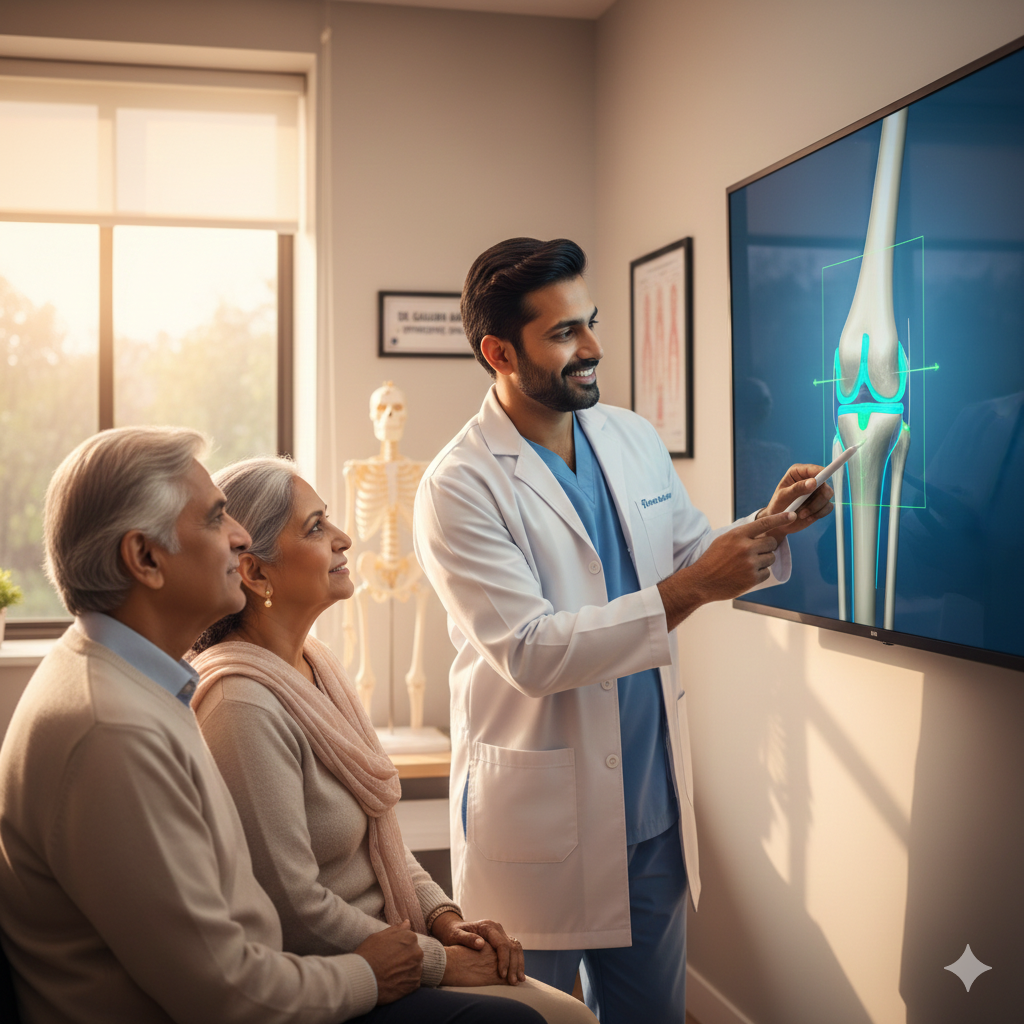
Patients visiting Dr. Gaurav Arora, a renowned orthopaedic surgeon in Gurugram, are increasingly choosing robotic-assisted procedures for several high-impact reasons:
1. Unmatched Precision and Alignment
The robotic arm ensures that the implant is placed in perfect harmony with your unique anatomy. Even the most skilled human eye can have a margin of error; the robot does not. This “perfect fit” reduces the feeling of having a “mechanical” knee.
2. Reduced Risk of Re-Surgery
Statistics in 2026 show that robotic-assisted implants are 20-30% less likely to require a “revision” or second surgery in the future because the alignment is so precise, leading to less wear and tear over time.
3. Smaller Incisions, Less Blood Loss
The “minimally invasive” nature of the robotic approach means smaller scars and a lower risk of infection—a critical factor for patients seeking an orthopedic specialist in Gurgaon.
Managing Pain and Swelling: Tips for a Smooth Recovery
Even with advanced technology, your body needs support to heal. Here is how to manage the first few weeks effectively:
-
The R.I.C.E. Method: Rest, Ice, Compression, and Elevation remain the foundation of swelling management.
-
Adherence to Physiotherapy: Robotic surgery isn’t a “magic wand.” You must perform the exercises prescribed by your best orthopaedic doctor in Gurgaon to regain strength and flexibility.
-
Hydration and Nutrition: A diet rich in protein, Vitamin C, and Zinc supports tissue repair.
-
Early Movement: Don’t stay in bed. The robotic precision allows you to move safely; doing so prevents blood clots and stiffness.
Comparing Robotic vs. Traditional Surgery Outcomes
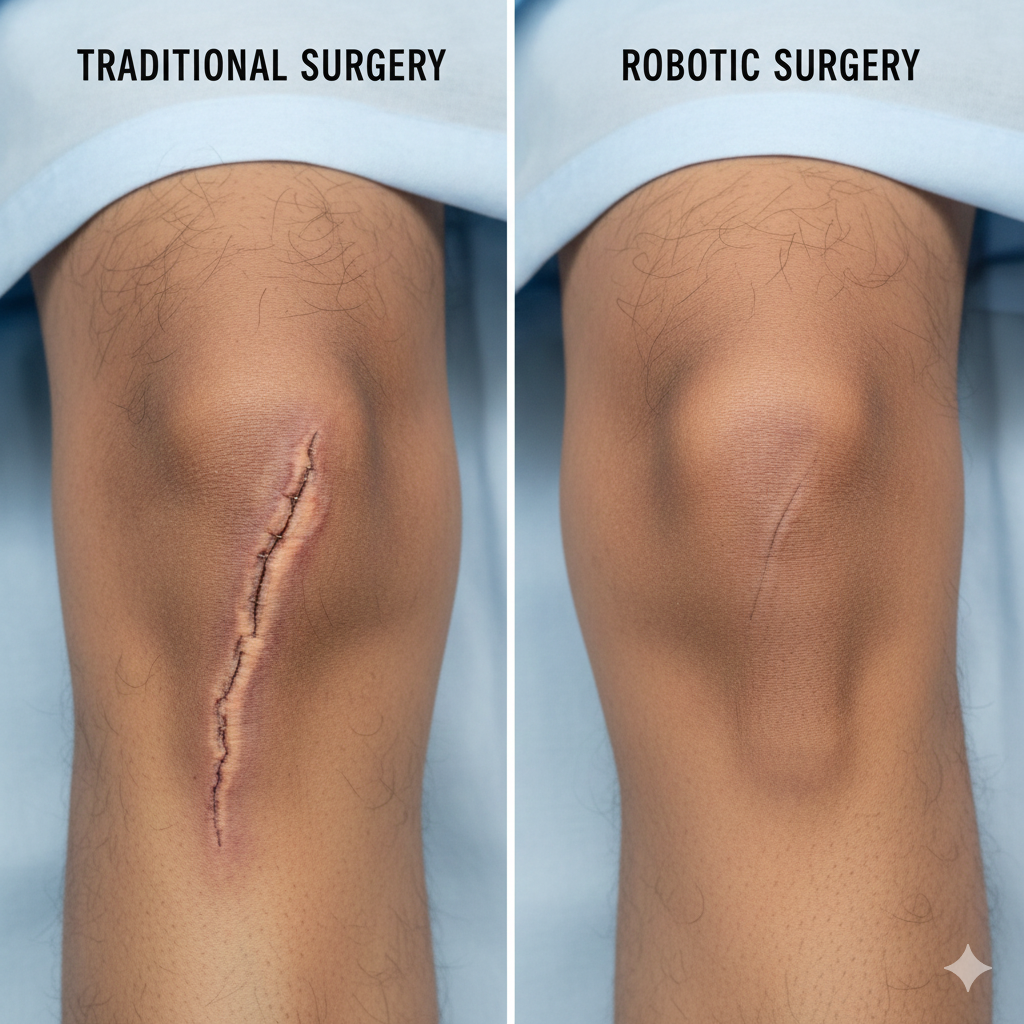
| Feature | Robotic-Assisted Surgery | Traditional Manual Surgery |
| Surgical Precision | Sub-millimeter accuracy | Dependent on manual jigs/tools |
| Pain Levels | Significantly Lower | Moderate to High |
| Hospital Stay | 1–2 Days | 3–5 Days |
| Return to Driving | 3–4 Weeks | 6–8 Weeks |
| Implant Longevity | Potentially 25+ years | 15–20 years |
Is Robotic Knee Replacement Right for You?
While the technology is transformative, it is essential to consult with a specialist. If you are experiencing bone-on-bone arthritis, chronic stiffness that limits your daily life, or if conservative treatments like physical therapy and injections have failed, you may be an ideal candidate.
In the hands of an expert like Dr. Gaurav Arora, the combination of clinical experience and robotic technology offers the best chance at a pain-free life.
Conclusion: Reclaim Your Active Life
The goal of any joint replacement is to forget that you ever had a problem with your knee. In 2026, robotic technology has made this goal more achievable than ever before. With faster recovery times, less pain, and a more natural-feeling joint, you don’t have to put your life on hold.
Ready to walk pain-free again?
Don’t let joint pain dictate your lifestyle. Consult with the best orthopaedic doctor in Gurgaon today to see if robotic knee replacement is the right choice for your recovery.