The Silent Crisis: Early Onset Osteoarthritis, Sports Injuries, and Joint Health in Young Adults
Joint pain and arthritis were once considered inevitable parts of old age. However, a silent crisis is unfolding in India and globally: the increasing diagnosis of Early Onset Osteoarthritis (EOA) and severe joint injuries in individuals in their 30s, 40s, and even younger. This demographic shift is fueled by a confluence of modern lifestyle factors, intense physical activity trends, and inadequately treated sports trauma.
This blog explores why young, active adults are increasingly facing premature joint degeneration. More importantly, it highlights the critical interventions available to protect your joints, manage early symptoms, and preserve long-term mobility, guided by a specialized orthopaedic surgeon in Gurugram.
Understanding the Shift: Why Are Joints Wearing Out Sooner?
Osteoarthritis (OA) is the breakdown of the protective cartilage that cushions the ends of bones, causing pain, swelling, and stiffness. While it is degenerative, its onset is no longer strictly linked to advanced age. Early-onset OA, defined as diagnosis before the age of 50, is rising rapidly due to several interconnected risk factors.
Featured Snippet Definition: Early Onset Osteoarthritis (EOA) refers to the diagnosis of degenerative joint disease, typically in the knee or hip, in individuals under the age of 50. It is primarily triggered by joint trauma (Post-Traumatic Arthritis), rising obesity rates, sedentary lifestyles, and chronic inflammation linked to metabolic and modern factors.
The Dual Threats: Lifestyle and Post-Traumatic Arthritis
The causes of joint issues in young adults fall into two major categories, both highly prevalent in modern society:
1. The Lifestyle Storm
- The Obesity Epidemic: Excess body weight puts tremendous, disproportionate stress on weight-bearing joints—the knees and hips. For every kilogram of weight gained, the force exerted on the knees during walking increases by four-fold. This acceleration of wear-and-tear is a primary driver of EOA.
- Sedentary Habits and Poor Posture: Long hours spent sitting in front of screens, coupled with poor ergonomic setup, lead to muscle weakness around the joints (especially the back and hips). When the stabilizing muscles are weak, the joints bear the load directly, speeding up cartilage damage.
- Metabolic and Systemic Factors: Conditions like diabetes and Vitamin D deficiency, both common in India, are known to promote chronic inflammation. This inflammation accelerates the breakdown of cartilage tissue, effectively speeding up the aging process of the joint.
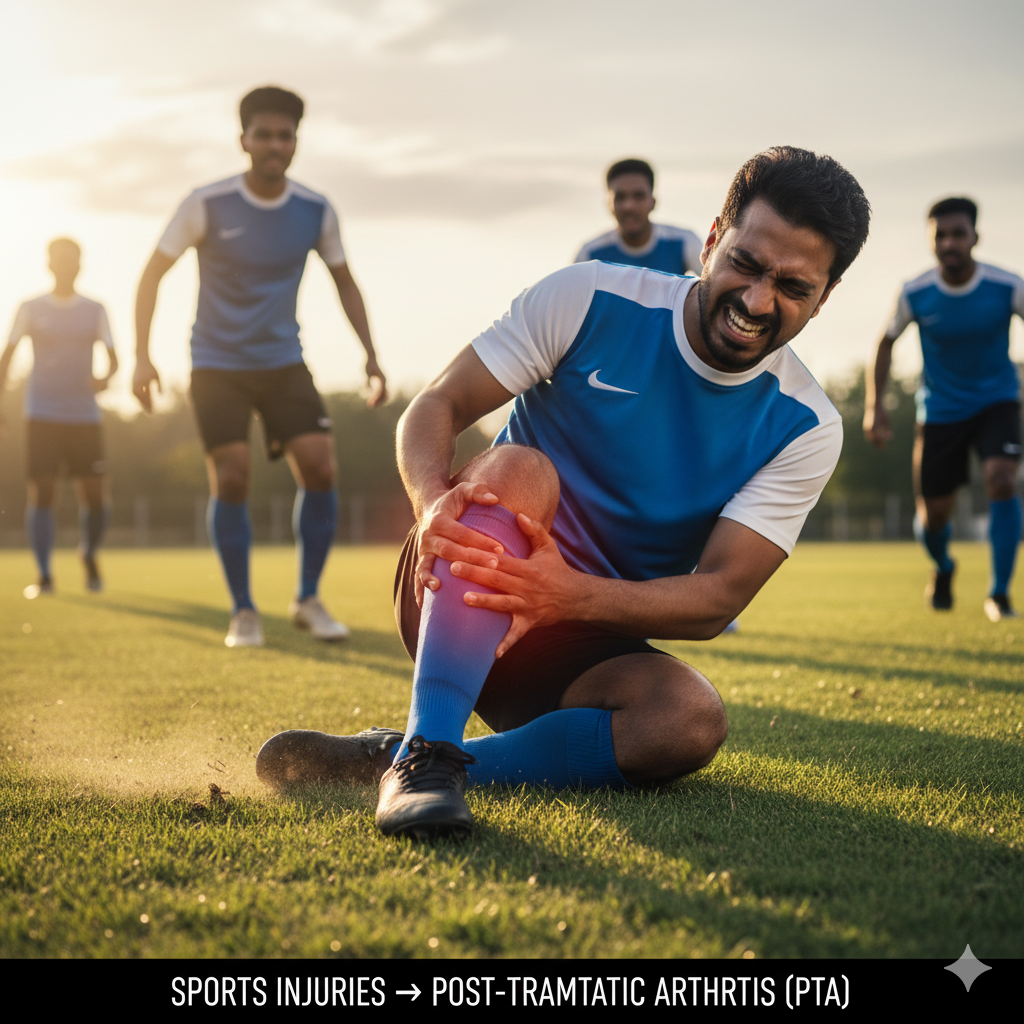
2. The Unaddressed Injury: Post-Traumatic Arthritis (PTA)
The second, and perhaps most critical, cause of EOA in young, active people is the legacy of sports and accident-related joint trauma.
- Ligament Tears (e.g., ACL): A tear in the Anterior Cruciate Ligament (ACL), a common injury in pivoting sports like football or basketball, destabilizes the knee. Even after successful ACL reconstruction, the initial injury, coupled with altered joint mechanics, significantly raises the risk of arthritis within 10 to 20 years.
- Meniscal Injuries: The meniscus acts as a critical shock absorber in the knee. A tear disrupts the knee’s ability to cushion movement, leading to concentrated stress and rapid erosion of the cartilage surface.
- Inadequate Rehabilitation: A major factor in PTA is returning to high-impact activities too soon after injury or skipping comprehensive physiotherapy. This leaves the joint vulnerable to re-injury and cumulative damage.
Identifying Common High-Risk Sports Injuries
For active individuals and athletes, recognizing the symptoms of serious joint injury and seeking immediate, specialist care from the best orthopaedic doctor in Gurgaon is non-negotiable for preventing EOA.
| Injury Type | Common Mechanism of Injury | Telltale Symptoms | Risk of Early OA |
| ACL Tear (Anterior Cruciate Ligament) | Sudden stopping, pivoting, or twisting (non-contact). | Immediate, significant swelling; a loud “pop” sensation; feeling of the knee “giving way.” | High – requires surgical stabilization to reduce long-term risk. |
| Meniscal Tear | Deep squatting, twisting the knee while weight-bearing. | Catching, locking, or clicking in the knee; localized pain on the joint line; swelling. | Moderate to High – depends on tear location/size and treatment. |
| Shoulder Instability/Dislocation | Hard impact or fall, especially in contact sports. | Extreme pain; visible deformity of the shoulder; repeated feeling of the shoulder slipping out of the socket. | High – leads to damage of the labrum and cartilage (glenohumeral joint). |
The Role of Specialized Orthopedic Intervention
For patients in Gurugram and surrounding areas, having access to a specialized orthopaedic surgeon in Gurugram who understands the biomechanics of the young, active joint is essential. The approach is focused on prevention, joint preservation, and personalized treatment.
I. Advanced Diagnostics
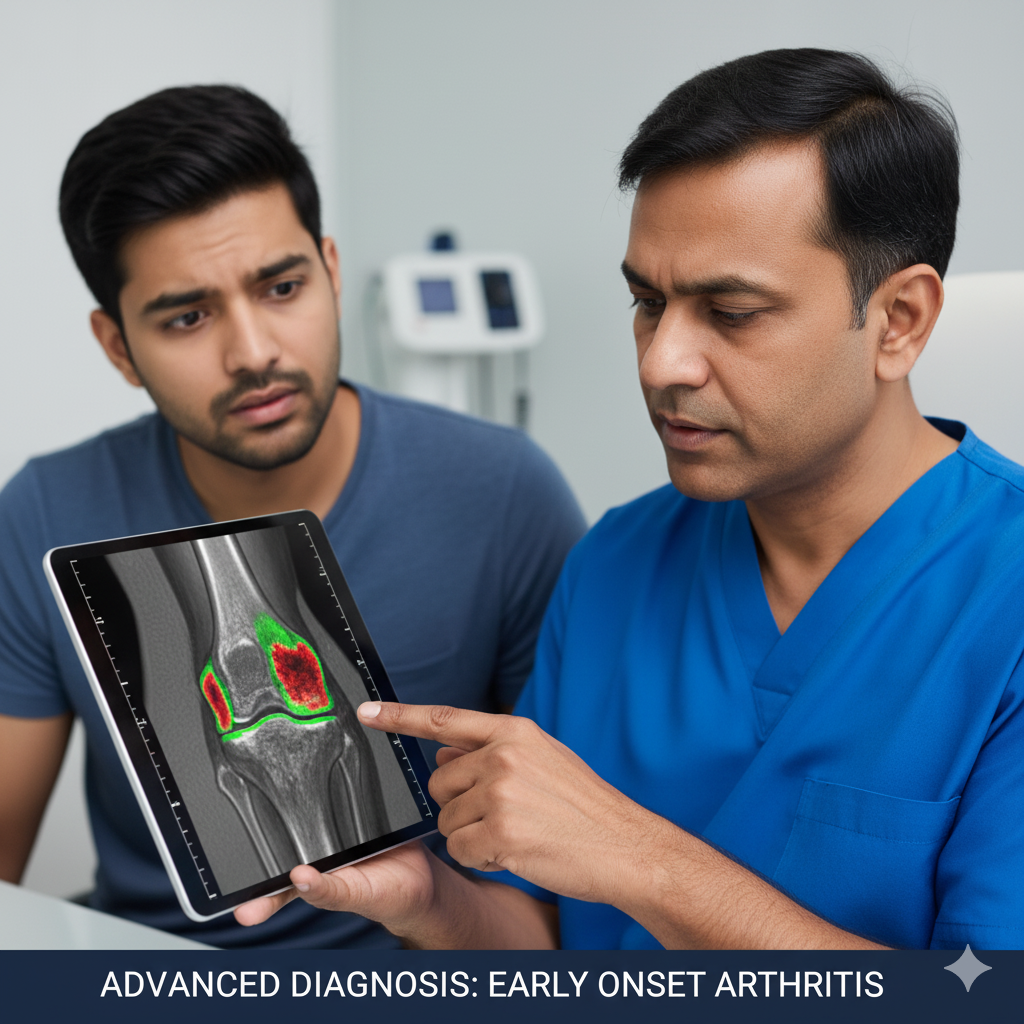
Diagnosis of EOA and post-traumatic conditions goes beyond standard X-rays.
- High-Resolution MRI: Essential for visualizing soft tissues like the ACL, menisci, and articular cartilage, allowing for the precise grading of damage.
- Dynamic Ultrasound: Used to assess joint stability and the function of muscles and tendons during movement.
- Patient-Specific Biomechanical Analysis: Assessing walking gait, running mechanics, and posture to identify imbalances that place undue stress on specific joints.
II. Joint Preservation Strategies (Delaying or Preventing Replacement)
The primary goal for young patients is to preserve the natural joint for as long as possible. A leading orthopedic specialist Gurgaon utilizes advanced techniques to achieve this:
- Regenerative Medicine: Therapies like Platelet-Rich Plasma (PRP) or certain cell-based injections can be used to leverage the body’s natural healing factors. These injections aim to reduce inflammation and potentially stimulate a limited degree of cartilage or soft tissue healing.
- Arthroscopy for Joint Cleanup: Minimally invasive keyhole surgery (arthroscopy) can be used to repair or trim damaged meniscal tissue, stabilize cartilage, and remove loose bodies, correcting mechanical issues that accelerate degeneration.
- Osteotomy: In cases where early OA is caused by misalignment (e.g., bowed legs putting excess pressure on one side of the knee), an osteotomy involves carefully reshaping the bone to shift the weight-bearing axis to the healthier part of the joint.
ACL Reconstruction: A Preventative Measure Against EOA
An ACL tear is one of the most significant risk factors for PTA. For young, active individuals, surgical reconstruction by an experienced best orthopaedic doctor in Gurgaon is not just about returning to sport—it is a critical step in long-term joint preservation.
Why Surgical Stabilization is Key:
- Restoring Stability: A torn ACL causes instability, leading to continuous micro-trauma and abnormal movement between the thigh bone (femur) and shin bone (tibia).
- Protecting Cartilage: Restoring stability is the best way to prevent the chronic rubbing and abnormal wear patterns that destroy the cartilage and lead to early arthritis.
- Anatomical Reconstruction: Modern techniques focus on replicating the native ACL’s anatomy as closely as possible, providing rotational stability that protects the menisci and cartilage surfaces from further injury.
Lifestyle Interventions: Your Daily Commitment to Joint Health
While expert orthopedic care is vital for injury, the day-to-day management of joint health rests firmly on the patient’s shoulders.
Actionable Steps to Slow EOA:
- Maintain a Healthy Weight: This is the single most powerful lifestyle change. A healthy Body Mass Index (BMI) drastically reduces the load on the knee and hip joints.
- Incorporate Low-Impact Exercise: Swimming, cycling, and elliptical training keep the joints moving and the surrounding muscles strong without the damaging impact forces of running or jumping.
- Focus on Strength Training: Strong quadriceps, hamstrings, and core muscles act as natural shock absorbers, protecting the joint structures. Consult a physiotherapist to ensure proper form.
- Adopt an Anti-Inflammatory Diet: Incorporate foods rich in Omega-3 fatty acids (flaxseeds, walnuts), antioxidants (berries, leafy greens), and Vitamin D. Limit processed foods, sugar, and excessive red meat, which promote systemic inflammation.
- Ergonomic Correction: Ensure your workspace supports neutral posture, minimizing strain on the neck, spine, and wrists. Take frequent breaks from sitting to stretch and move. (Mayo Clinic offers excellent resources on ergonomic setups).
Important Note: If you experience persistent joint pain, stiffness lasting more than 30 minutes in the morning, or recurrent joint swelling, consult an orthopedic specialist Gurgaon immediately. Dismissing these symptoms as “just gym soreness” or “old age” when you are young can lead to irreversible damage.
The joint health landscape is changing, and Early Onset Osteoarthritis is a growing reality that young adults must face proactively. Whether the cause is a previous sports injury, a sedentary lifestyle, or genetic predisposition, early diagnosis and specialized intervention are the keys to preserving mobility and quality of life.
Do not wait for pain to become debilitating. If you are an active individual with chronic joint issues or a young adult concerned about knee or hip pain, seeking an expert opinion now is the best preventative step you can take.
To understand your joint health risks and explore personalized joint preservation treatments, contact Dr. Gaurav Arora, the best orthopaedic doctor in Gurgaon and a leading orthopaedic surgeon in Gurugram, today. Book your consultation and commit to protecting your joints for an active future. (Refer to Healthline for comprehensive information on ACL tear long-term effects).